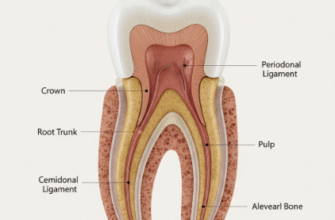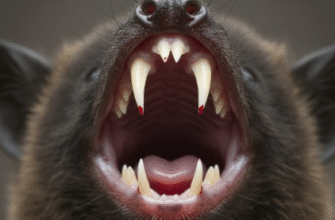
The structures residing within our jaws are far more than simple tools for breaking down food. They are intricate biological marvels, each type sculpted by millions of years of evolutionary pressures. Our teeth tell a story, not just of our individual lives, but of the grand, sprawling journey of vertebrate life on Earth. From the simplest aquatic ancestor to the complex creatures of today, the development and diversification of teeth is a fascinating chapter in the book of life, showcasing nature’s ingenuity at its finest.
Our Modern Mouthful: A Look at Human Tooth Types
If you take a moment to explore your own mouth (gently, of course!), you will find a collection of differently shaped teeth, each designed for a specific task. This variety, known as heterodonty, is a hallmark of many mammals, including us, and it speaks to a diet that is, or at least once was, quite varied. Each tooth type plays a crucial role in the initial stages of digestion.
The Cutting Edge: Incisors
Positioned at the very front of your mouth are the incisors. Typically, humans have eight of these – four on the top and four on the bottom. Their name, derived from the Latin word ‘incidere’ meaning ‘to cut’, perfectly describes their primary function. With their relatively sharp, thin edges, incisors are expertly designed for biting into food, shearing off manageable pieces. Think of biting into an apple or a carrot; it is your incisors that do the initial work, providing a clean and efficient cut.
Piercing Points: Canines
Flanking the incisors are the canines, often the most pointed teeth in the human mouth. We have four canines, one on each side of the incisors, both top and bottom. Their conical shape and sharp tips are ideal for gripping and tearing food, particularly tougher items like meat. While in many predatory animals, canines are dramatically elongated and serve as formidable weapons or display structures, human canines are more modest in comparison. Nevertheless, they still play a vital role in our ability to process a varied diet and also help to guide the jaw into its proper biting position when closing.
The Grinding Duo: Premolars and Molars
Moving further back into the mouth, we encounter the premolars, also known as bicuspids. Humans typically have eight premolars, two on each side of the canines in both jaws. These teeth represent a transition in form and function from the tearing canines to the grinding molars. They often have two pointed cusps (hence ‘bicuspid’) and a flatter occlusal (chewing) surface than canines, allowing them to both tear and crush food. They act as an intermediary, breaking down pieces of food into smaller fragments, preparing them for the heavy-duty work of the molars.
At the very back of the oral cavity are the molars, the largest and strongest teeth in the mouth. Most adults have twelve molars, arranged as three on each side of both the upper and lower jaws. This count includes the four wisdom teeth (third molars), though these are notoriously variable, sometimes failing to emerge properly or requiring removal. Molars have broad, relatively flat surfaces characterized by multiple rounded cusps. Their primary job is to grind and crush food into a fine paste, making it easier to swallow and significantly aiding digestion. The powerful chewing muscles of the jaw work in concert with the molars to break down even tough plant fibers and other resilient foodstuffs, ensuring maximum nutrient extraction.
Echoes of the Past: The Evolutionary Saga of Teeth
The teeth we possess today are not a recent invention in the grand scheme of life. Their origins stretch back hundreds of millions of years, to some of the earliest jawed vertebrates. Understanding this deep history reveals how these essential structures arose from humble beginnings and diversified in spectacular fashion, responding to an ever-changing world and the relentless demands of survival and dietary adaptation.
From Skin to Smile: The Earliest Teeth
The very first ‘teeth’ likely did not even start in the mouth. A widely accepted scientific theory posits that teeth evolved from dermal denticles – small, tooth-like structures found on the skin of early fish. These are akin to the placoid scales seen on modern sharks and rays, which give their skin its famously rough, sandpaper-like texture. These skin denticles, composed of a pulp cavity, dentine, and an enamel-like outer layer, are remarkably similar in structure and composition to true teeth. It is hypothesized that over vast stretches of evolutionary time, these external structures migrated into the oral cavity. Initially, they may have simply lined the edges of the jaws, providing a rough surface to grip slippery prey. Early vertebrate teeth were often simple, conical, and numerous, and unlike mammalian teeth, they were typically replaced continuously throughout the animal’s life.
The Great Dental Divide: Homodonts vs. Heterodonts
For a vast stretch of evolutionary time, many vertebrates, including a multitude of early fish, amphibians, and reptiles, possessed what is known as homodont dentition. This term signifies that all their teeth were largely similar in shape and function – typically simple, peg-like cones. These teeth were primarily used for grasping and holding onto prey, which was often swallowed whole or in large chunks with minimal oral processing. Think of a crocodile’s impressive array of sharp, uniform teeth; this is a classic example of homodonty. While effective for their specific hunting and feeding strategy, homodont teeth offer limited food processing capability.
A major evolutionary leap, a true game-changer in vertebrate history, occurred with the emergence of heterodont dentition. In heterodont animals, the teeth within the same mouth became differentiated into various shapes and sizes, each specialized for different tasks. This innovation is most prominently seen in mammals, although some of our reptilian ancestors, the synapsids, showed early signs of this dental specialization. The development of incisors for cutting, canines for tearing, and premolars and molars for crushing and grinding allowed for much more efficient food processing before swallowing. This, in turn, opened up a plethora of new dietary niches and likely contributed significantly to the remarkable adaptive radiation and subsequent ecological success of mammals.
Shaping a Smile: How Diet Drove Dental Diversity
The incredible variety of tooth forms observed across the animal kingdom is a stunning testament to the power of natural selection and adaptive evolution. As animals adapted to different diets over millennia, their teeth evolved in concert, becoming highly specialized tools meticulously shaped for acquiring and processing specific types of food. Form, in the world of teeth, truly and demonstrably follows function, and that function is overwhelmingly dictated by what an animal eats to survive and thrive.
The Herbivore’s Toolkit
Animals that primarily consume plants, the herbivores, face unique dietary challenges. Plant matter can be tough, fibrous, and highly abrasive due to silica content (phytoliths) in plant cells. Consequently, herbivores have evolved a fascinating array of dental adaptations to cope effectively. Many large herbivores, like cows, sheep, and horses, possess broad, flat molars with complex ridges of enamel that act like millstones. These teeth are designed for extensive grinding of tough grasses and leaves, breaking down cellulose. Their incisors are often adapted for nipping or cropping vegetation. Rodents, another highly successful and diverse group of herbivores, showcase continuously growing incisors that are self-sharpening due to differential hardness of enamel and dentine. These are perfect for gnawing through hard seeds, nuts, tree bark, and other woody material. The constant wear from gnawing is precisely counteracted by this ceaseless growth.
The Carnivore’s Arsenal
For meat-eaters, the dental priorities are markedly different. Capturing, killing, and processing animal prey requires sharp, robust teeth capable of puncturing hide, slicing flesh, and sometimes even crushing bone. Carnivores typically boast prominent, dagger-like canines for delivering fatal bites and securely gripping struggling prey. A key dental feature in many carnivorous mammals, such as those in the order Carnivora (e.g., cats, dogs, hyenas), is the development of specialized shearing teeth called carnassials. These are usually formed from the fourth upper premolar and the first lower molar, which slice past each other with precision, like the blades of scissors, efficiently cutting through meat and sinew. Their other molars are often reduced in size and complexity or may be absent altogether, as extensive grinding is less critical for a predominantly meat-based diet.
The Omnivore’s Advantage
Omnivores, those animals that consume a mixed diet of both plant and animal matter, tend to have more generalized dentition, reflecting their dietary flexibility and opportunism. Human teeth are a classic example of an omnivorous dental plan. We possess the cutting incisors, the tearing canines (though notably less pronounced and weapon-like than in dedicated carnivores), and the crushing/grinding premolars and molars. This versatility allowed our ancestors to exploit a wide range of food sources available in diverse environments, a trait that undoubtedly contributed to human adaptability, resilience, and eventual global dispersal. Other familiar omnivores, such as bears and pigs, also exhibit teeth that are well-suited for handling everything from berries and roots to insects and small vertebrates.
Unraveling Our Own Dental Story
The teeth nestled in our jaws are more than just functional tools; they are living fossils, each cusp, valley, and ridge a subtle whisper from our deep evolutionary past. By meticulously studying the dentition of our primate ancestors and early hominins, paleoanthropologists can piece together crucial details about their diets, behaviors, and the specific environmental pressures that shaped their evolution. For instance, the characteristically thick enamel found on the molars of some early hominins like Australopithecus suggests a diet that regularly included tough, abrasive foods, perhaps hard-shelled seeds, nuts, underground storage organs (tubers), or vegetation from gritty environments. This contrasts with the thinner enamel seen in modern chimpanzees, who consume a greater proportion of soft fruits.
As human evolution progressed along its unique trajectory, there were notable and significant shifts in dental architecture. The canines, which are prominent in many other primate species and often used for social display or intra-species aggression as much as for food processing, became significantly smaller and less fang-like in the human lineage. Jaw size, or prognathism, also tended to decrease over time, particularly with the advent of controlled fire for cooking and the increasing sophistication of tool use. These cultural innovations effectively pre-processed food, reducing the selective pressure for maintaining such a large and powerful masticatory apparatus. The story of our teeth is therefore intricately woven with the story of our changing diet, our technological advancements, and even the evolution of our social structures. They provide a direct, tangible link to the challenges and opportunities faced by those who came before us on the long road to becoming modern humans.
Teeth are remarkably durable structures, often being the best-preserved parts of an animal’s skeleton found in the fossil record.
This exceptional durability makes fossil teeth invaluable resources for paleontologists, providing direct and detailed evidence of ancient ecosystems, dietary habits, and evolutionary pathways.
The microscopic study of tooth wear patterns, a field known as dental microwear analysis, can even reveal specific details about the types of food an extinct animal regularly consumed shortly before its death.
Thus, every fossil tooth, no matter how small, holds a tiny key that can help unlock the grand mysteries of prehistoric life and the evolution of species.
From the simple, undifferentiated dermal scales of ancient fish to the complex, highly specialized sets we observe in mammals today, teeth have undergone an extraordinary and lengthy evolutionary journey. They stand as a prime example of biological adaptation, constantly being refined and remolded by the relentless pressures of diet, environment, and inter-species competition. Whether designed for slicing, dicing, piercing, crushing, or grinding, each tooth type and overall dental arrangement reflects a unique and effective solution to the fundamental biological challenge of acquiring and processing nourishment. As scientific techniques continue to advance, allowing us to delve deeper into the fossil record and unravel the genetic basis of dental development, the intricate story of teeth will undoubtedly become even richer and more detailed, offering further profound insights into the magnificent and ever-evolving tapestry of life on Earth.